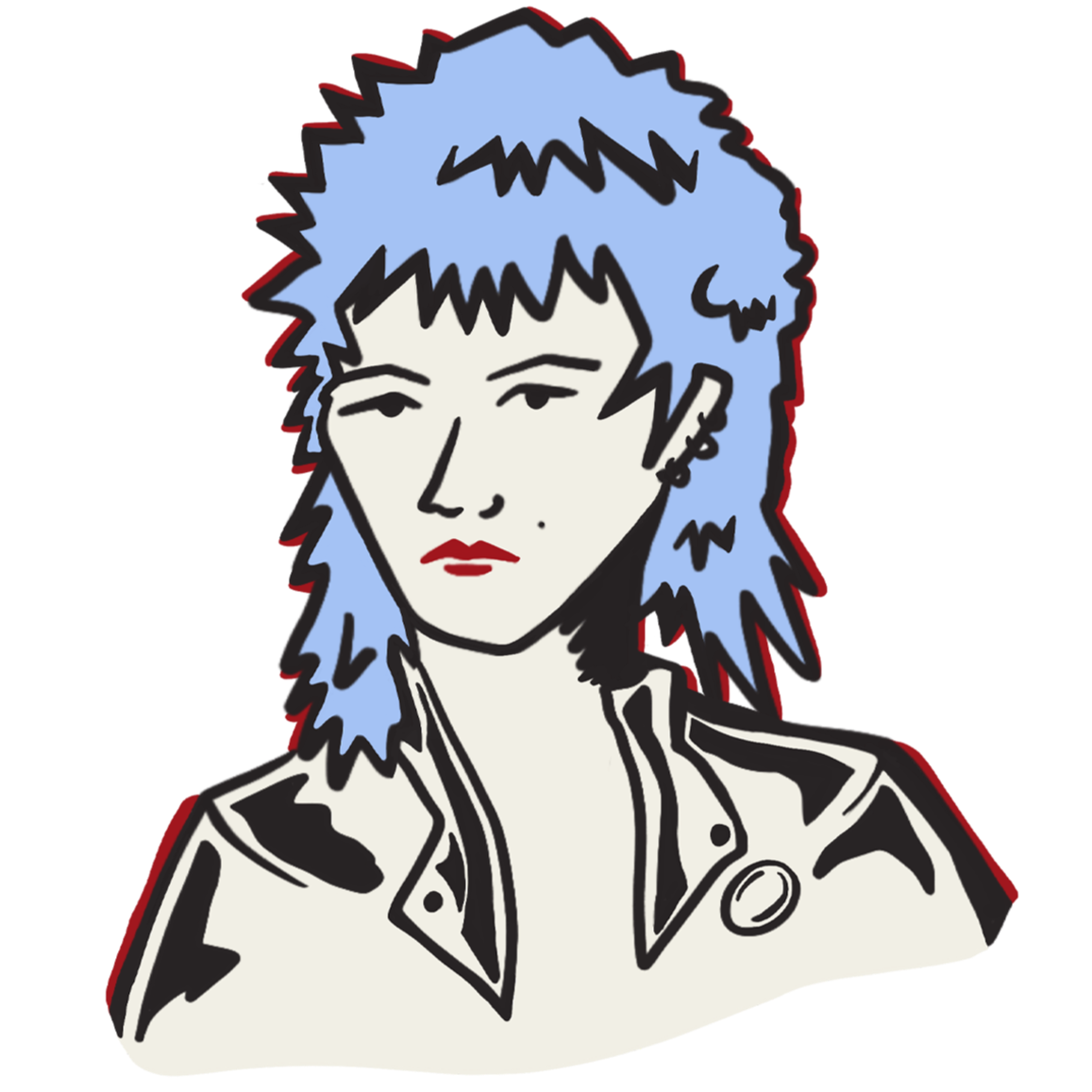
Three decades of this mind, this body, and this voice not being stifled by your deviant ways.
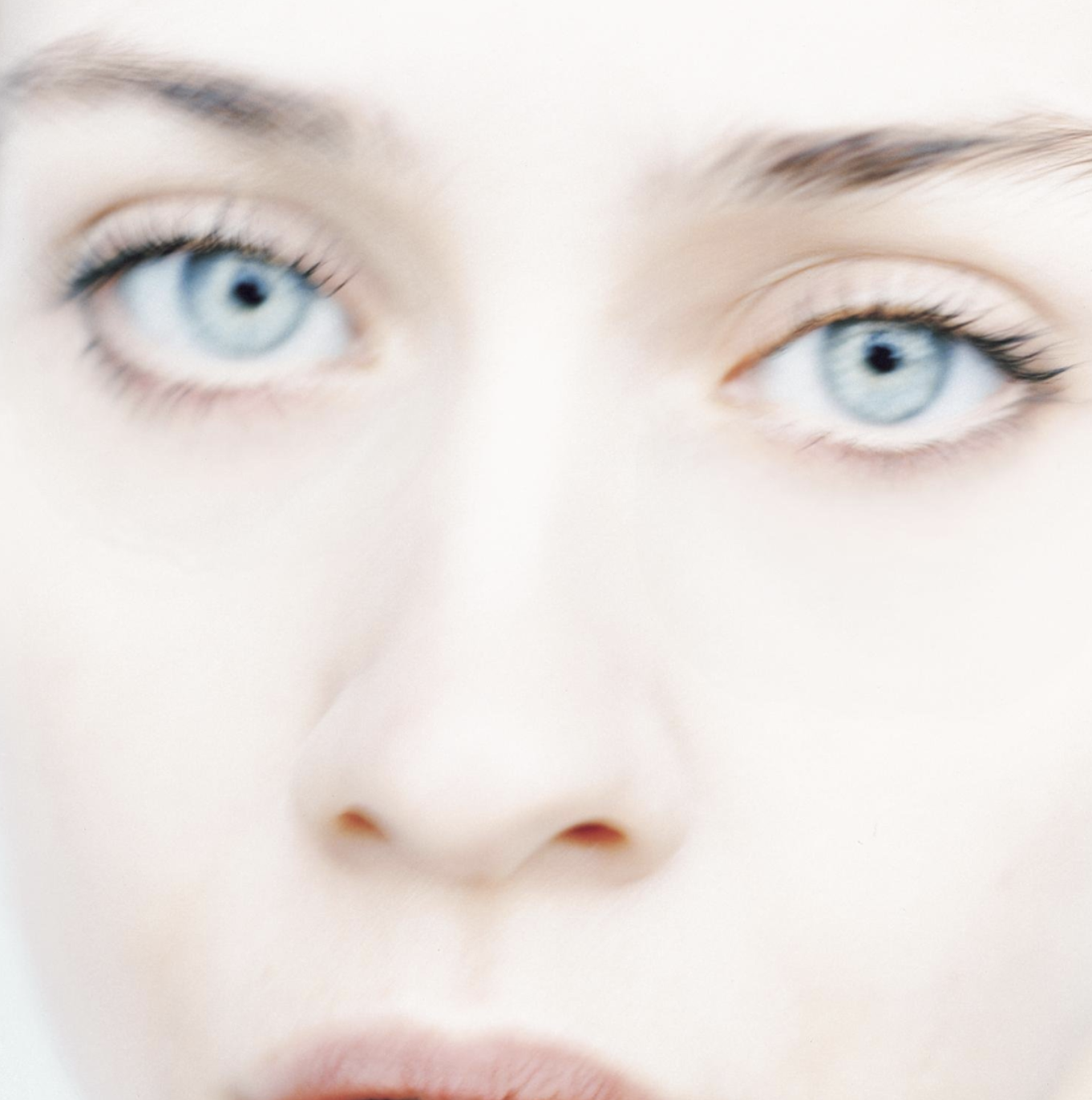
Tidal cover art, shot by Joe McNally.
Today, Fiona Apple’s debut album turns 30 years old. That makes her only 18 the year of its release, 19 at the iconic “Go with yourself” speech (we’ll get to that), and much younger when most of the lyrics were written. Lyrics impressive for anyone at any age, especially a teenager.
She bares her emotions in all their complexity, beautifully and unapologetically. She is unrelenting in the face of confrontation with others and with herself. She sings of the ever-relatable whirlwind that is teenage heartbreak with a determined finality (“Won't do no good to throw no fist, babe / You can't intimidate me back into your arms / Because honey, I've gone away”), and of lust with tempting charm (“Adagio breezes fill my skin with sudden red / Your hungry flirt borders intrusion / And I'm building memories on things we have not said”).
She is not some sort of prodigy, and by no means is she prolific. I’m even hesitant to call her a genius. Truly her strength and skill lie in her honesty.
She puts herself under the microscope just as much as the disappointing people she writes about. The result of this honesty, vulnerability, self-reflection, and ultimate self-respect is an album overflowing with not just raw emotion, but lyrics that continue to strike a chord even after three decades.
Her lyricism is so impressive, in fact, that producer Andrew Slater was in disbelief of who wrote the songs when he first heard them. He told the New York Times, of meeting her for the first time, “I was not entirely convinced that this person sitting in front of me—who was clearly 17—had written those words”.
“Though dreams can be deceiving
Like faces are to hearts
They serve for sweet relieving
When fantasy and reality lie too far apart”
It is a well-known fact among fans that Fiona Apple started composing in an endeavour to soundtrack animal scenes from National Geographic. “I would go to my room and try to make the chase happen on the piano”, she says.
But that was all instrumental. The lyricism began in solidarity to a friend (a quality she carries to this day with her most recent track, Pretrial (Let Her Go Home)). The story goes that her friend Manuella had fought with her parents and Fiona thought to herself, in a rather matter-of-fact manner, “when your friend is upset, you write a song for them”.
Her own description of writing is not of something enjoyable but of something necessary. She describes her songs to Craig Ferguson as pep talks: “I write all these songs that are very angry towards people, and it’s all about trying to make it seem like I’ve got it all under control. And it’s not true, I never feel like that when I’m writing the songs, they’re all kind of pep talks. But they end up coming true later on. After a year or two, I’ll finally actually feel as strong as I tried to pretend I was when I wrote the song”.
Talk about manifestation.
“When you know yourself, you know a lot.”
And if her poetic ability comes from self-assurance, then the topics themselves come from observation. In one of my favourite quotes by her (which lives on a sticky note on my wall), she speaks of the power of paying attention. “I may be very young”, she says, “but I pay a lot of close attention to everything that happens to me, and everything that happens around me. And so I absorb a lot of information—not just factual information, but emotional information. I pay attention a lot to how I feel about things, and when you pay attention to how you feel about things and you think about things a lot, you learn a lot about yourself. And when you know yourself, you know a lot.”
Hence, she’s not any different than anyone else in the world. Therein lies her strength. She simply pays attention and knows herself.
Throughout the album, she displays the duality of her sensitivity and her strength. On Criminal (which she wrote in 45 minutes) she grapples with her ability to use her sexuality to get what she wants while facing the guilt that comes with it. On Sleep to Dream, written at 14 years old, she is more grounded in reality than many of us dream of well into adulthood. In songs like these, respect is not a luxury but a given that should spare no ostentation.
And her eloquence is deliberate. “the whole reason why I wanted to make an album in the first place”, she’s explained, “was because I was so tired of trying to explain my personality to people”.
Still, she has never tried to hide her fragility. In an interview with Pitckfork, she says, “I’m really, really sensitive, and it’s not easy. I’m a person who does not have a thick skin. And I don’t think I really want a thick skin. I don’t want to grow a callus all over myself. I don’t feel like I would be able to make anything that I would love if I did that.”
This is why she shows so many aspects of herself. She sings of temptation in The First Taste with the lines “I do not struggle in your web, because it was my aim to get caught”.
Never is a Promise faces betrayal but dealing with it on her own: “You say you’d never let me fall from hopes so high, but never is a promise and you can’t afford to lie.” Pale September faces the vulnerability of falling in love, “All my armour falling down in a pile at my feet / And my winter giving way to warm as I'm singing him to sleep”.
In the midst of it all lives an unrelenting anti-bullshit mentality. (I said we’d get to this, and here we are.)
Between her debut and sophomore album, Fiona Apple won the award for the music video for Criminal, and in her acceptance speech she called out the bullshittery of the entertainment industry (for lack of a better word). A speech that would have given her flowers today was, at the time, met with scornful and dismissive remarks of a teenage girl throwing a fit onstage.
In reality, she urged listeners to think for themselves (specifically, “go with yourself”), as she’s done so far in life.
Despite the timelessness of the often quoted “this world is bullshit” line, there’s an often disregarded sentence that encapsulates Fiona Apple’s approach to her career. “Maya Angelou said that we as human beings at our best can only create opportunities. And I’m gonna use this opportunity the way that I want to use it.” Just before urging the audience to go with themselves she does the very same. At an age before her frontal lobe is even fully developed, Fiona Apple has the guts to say and do more than many people have had until and since then.
When the audience begins to applaud her bullshit callout, she stops them to continue her message. You can watch her cut the bullshit in real time. It’s a quality inseparable from her, it’s visible in her art for the last three decades but also in every other context we see her in.
“Never is a promise
And I’ll never need a lie”
In truth, it’s difficult to find the words to do this project justice. Ironically, I bet Fiona Apple would have found the best words (despite recently alluding to facing writer’s block, but that is for vastly different reasons).
There are truly countless reasons to admire this album, and Fiona Apple’s career in general. But personally the reason I keep returning to it is simply pure astonishment at her poetic abilities as well as her unwavering self-assurance, and the permission she gives us to share these qualities.
I became aware of Fiona Apple at the age of 13 or 14, and a true fan at 19. It was the beginning of the hardest year of my life, and her poetry came like the words of a loved one who holds your hand and shakes you up all in one go. At no point does she urge the listener to suck it up, but rather urges us to keep going despite the hellfire that life can often be.
Needless to say that Fiona Apple and I have lived very different lives (grew up on opposite hemispheres, in vastly different decades, with incredibly different backgrounds). Despite this, the universality in her lyrics struck a chord with me and countless young women around the world, for what is now three decades. I believe that what keeps us coming back to her is not some deep analysis of her poetic restructuring, internal rhymes, thesaurus-like vocabulary, and bottomless eloquence—although that is an undeniable part of the appeal.
Really, it’s the self-acceptance that many of us girls envy and desire, and are taught to neglect. In a period of our lives when we are bombarded with reasons to hate ourselves, to edit, to tweak, to optimise and analyse all facets of what it means to be a woman until we are an edge-less blob that all look the same, Fiona Apple calls bullshit on that and allows us to do the same. She discloses all her ugliness in the same breath as her strengths, and treats both as equals. When we listen to someone do this so beautifully and unapologetically, we are allowed to aspire to do the same. This, truly, is something that will never die.