
The lifelong poetry of Chico Buarque
A brief look into the Brazilian icon’s defiance through art
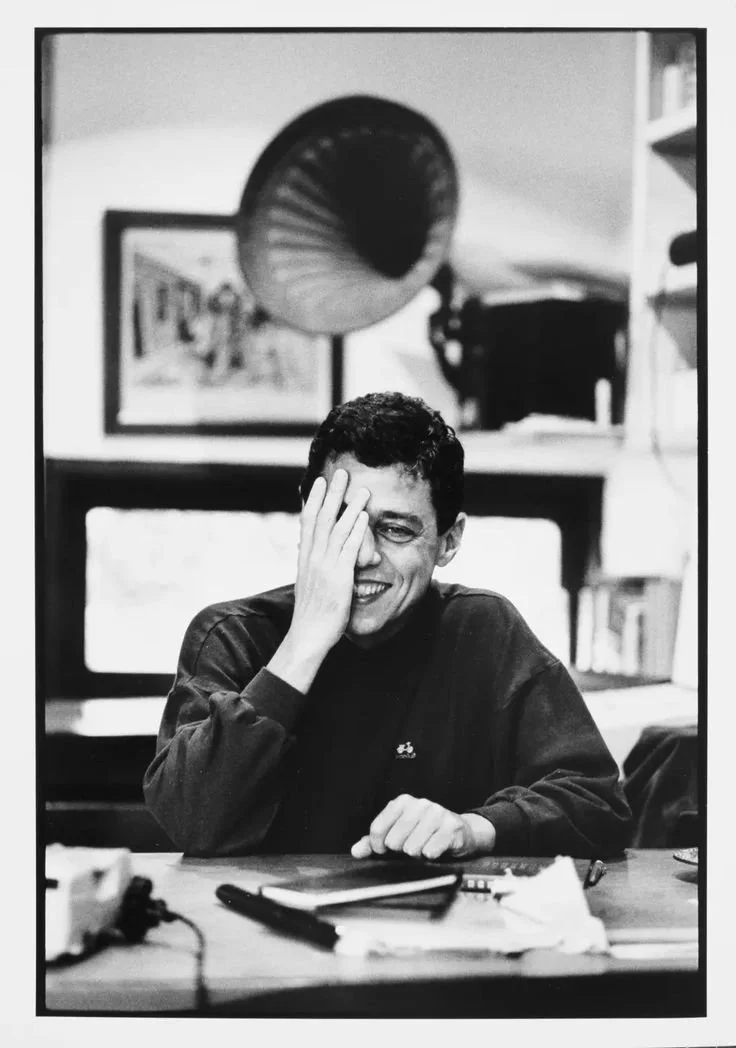
Chico Buarque shot by Antonio Augusto Fontes
The first song on the first album by Chico Buarque is A Banda, which tells the tale of a band performing through a town, bringing such joy that wilted flowers rise, people forget their illnesses, and the moon shines in the sky. An appropriate introduction, as it’s not just a celebration of music in the face of repression, but a description of how many Brazilians feel listening to Chico Buarque’s six-decade long catalogue.
Buarque began making music professionally in his early 20s, but his interest in it was lifelong: at the age of five he made collages of singers he heard on the radio. As a tween, he wrote operatic songs to be performed by his sisters. As a teenager, his interest in literature took off as he read French, German, and Russian books.
He came from an intellectual family: his father was a sociologist, journalist, and historian, while his mother was a renowned painter and pianist. At the age of 13 he, his parents, and his six siblings moved to Italy when his father became the history teacher at the University of Rome. There, the family’s home was a hotspot for creative minds including fellow Brazilian cultural icon and poet Vinicius de Moraes.
Buarque, like his parents, was on the academic path and studied architecture in Rio de Janeiro. But he cut his studies short in 1964, when the oppressive effects of Brazil’s emerging military operation were seeping into his university curriculum. The following year, his musical career began.
“Que tal um beleza pura no fim da borrasca?
Já depois de criar casca e perder a ternura
Depois de muita bola fora da meta
De novo com a coluna ereta, que tal?
Juntar os cacos, ir à luta
Manter o rumo e a cadência
Desconjurar a ignorância, que tal?”
Chico Buarque was one of those rare immediate successes, and while his skills—especially lyrical—are undebatable, he was a product of his time. The early stages of his musical career go hand in hand with the dictatorship, which would go on to last 21 years until 1985.
Buarque’s catalogue started largely with topics classic in Bossa Nova (Carnaval, your guitar being your best friend, and an undying love for Samba). That said, already from the start he wrote the stories of people living under the oppressive government with great nuance and poetic skill.
His debut album included Pedro Pedreiro, the story of a construction worker who spends his entire life waiting. For the train that takes him to work, for his raise, for luck, for some vague “good thing” to save him (note that in Portuguese, “waiting” and “hoping” are the same word: “esperando”).
Buarque’s defiance often presented joy as an act of resistance. In Apesar de Você he confronts the then president in saying that despite his best efforts, there will be love, art, light, and freedom again.
Soon enough, Buarque became a target of censorship, having much of his work banned. One of the most cited examples is the song Cálice, a play on the word chalice and, crudely, “shut up” (read aloud in Portuguese, the word is pronounced “cale-se”). In one performance in 1973 with Gilberto Gil, their microphones were cut mid-song. He wouldn’t perform it again until 2018, 45 years later.
He sang of the everyman (and everywoman, often singing from a female perspective) telling their story in ways that honour the reality of being a blue-collar worker at that time. The grit, the pain, the joy, and the simplicity of such lives all coexist. Buarque doesn’t choose one simple aspect of the people’s lives to sing of and dissect, but rather paints the whole picture encompassing and embracing all their humanity.
His catalogue is replete with protest music (and plays) that faced similar scrutiny, but this just created more opportunities for Buarque to prove his poetic skill. He greatly employed metaphors and double entendres as a way to sneak his message into his music and escape this censorship. (That said, he also tried less conventional methods to get his music approved: in an interview, Buarque shares his attempt to get the so-called “censor” drunk one night so he would more easily approve his music. This did not work. )
“Apesar de você, amanhã há de ser outro dia
Ainda pago pra ver
O jardim florescer
Qual você não queria
Você vai se amargar
Vendo o dia raiar
Sem lhe pedir licença
E eu vou morrer de rir
Que esse dia há de vir
Antes do que você pensa”
He knew, however, that it wasn’t just one antagonist in his story. The greater population of Brazil at the time largely didn’t want to hear his protests, and those who did, “already agreed”. Those he sang about were also the ones he sang to.
While it’s impossible to separate his multi-disciplinary catalogue from the dictatorship of the time, that’s not what makes him such a cultural icon. His genteel voice alone is almost a disguise for his iconoclastic words. His ever-evolving musical structure and combination of bossa nova, samba, and MPB refreshed the time’s musical landscape while still honouring its roots.
His musicality goes beyond his songs, as rhythm has always been a priority in his work. He fits every word in perfectly, as if assembling a jigsaw puzzle. No word is wasted, no metaphor misused. Every story he tells needed to be told, living and breathing beyond him: in his own words, “when the characters free themselves from me, that’s when the fun starts”. To him, his subjects already exist and he’s telling their story rather than creating it.
As a young man, Buarque’s dream was to have the voice of João Gilberto, the instrumentals of Tom Jobim, and the poetry of Vinicius de Moraes. In pursuit of this, he became an icon unto himself, a north star for many young writers and musicians.
For sixty years, Buarque has been consistently reinventing himself, telling stories both his and of others. He’s helped shape the Tropicália movement, he’s been awarded the prestigious Camões Prize (which Bolsonaro withheld, and he finally received in in 2023 from Lula). He sings of love, of protest, of sexism, of hope, of pain, of life.
In today’s times, when things feel bleaker than it has in a lot of young people’s lifetimes, his words feel relevant, welcome, and necessary. His music is both a moment of catharsis and of respite, a comfort from someone who knows pain and knows it will end.
By the end of A Banda, the band has passed through the town and moved on. The people of the town go back to their usual, unglamorous lives. But for a brief moment, everything was joyous.